How to Start an IT Career from Scratch: The Complete Beginner’s Guide with 13 Steps
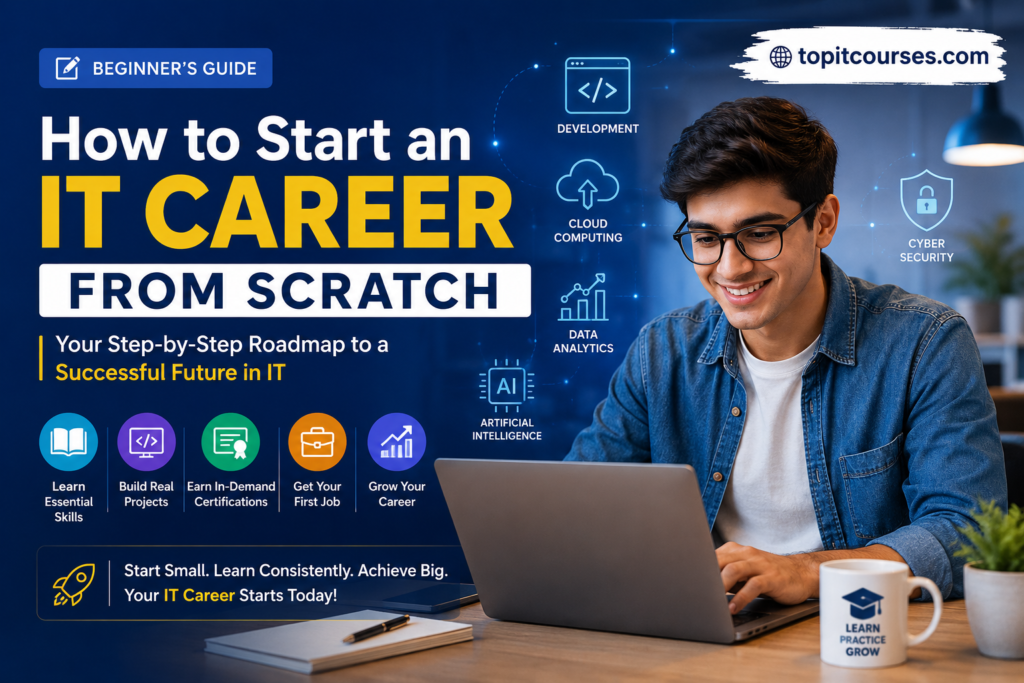
The technology industry continues to be one of the fastest-growing sectors worldwide, creating millions of job opportunities every year. Whether you are a student, a recent graduate, someone switching careers, or returning to work after a break, starting an IT Career has never been more achievable.
Unlike many traditional professions, the IT industry values practical skills, certifications, and real-world experience as much as formal education. With the right roadmap, dedication, and consistent learning, anyone can build a successful career in information technology.
This comprehensive guide explains everything you need to know about starting an IT Career from scratch in 2026, including the skills you need, certifications, career paths, salary expectations, and practical tips to land your first IT job.
Can You Start an IT Career Without a Degree?
Absolutely.
Many successful professionals have built rewarding IT Careers without a computer science degree.
Employers increasingly focus on:
- Practical skills
- Certifications
- Problem-solving ability
- Projects
- Communication skills
- Portfolio
- Internship experience
Your ability to solve real problems often matters more than your academic background.
Why Choose an IT Career?
An IT Career offers numerous advantages that make it one of the best career choices today.
High Demand
Businesses across every industry depend on technology. This creates continuous demand for IT professionals.
Excellent Salary
Entry-level IT jobs often offer competitive salaries, with significant growth opportunities as you gain experience.
Multiple Career Options
IT is not limited to programming. You can choose from dozens of specializations.
Some popular career paths include:
- Software Development
- Web Development
- Cybersecurity
- Cloud Computing
- Data Analytics
- Artificial Intelligence
- Networking
- DevOps
- Quality Assurance
- IT Support
- UI/UX Design
- Database Administration
Step 1: Understand the Different IT Career Paths
Before learning anything, understand the various fields available.
Software Development
Develop applications, enterprise software, desktop programs, and business solutions.
Skills:
- Java
- Python
- C#
- .NET
- SQL
Web Development
Build websites and web applications.
Skills:
- HTML
- CSS
- JavaScript
- React
- Angular
- Node.js
Cybersecurity
Protect organizations from cyber threats.
Skills:
- Ethical Hacking
- Network Security
- SIEM
- Linux
- Security Tools
Cloud Computing
Manage cloud infrastructure.
Platforms:
- AWS
- Microsoft Azure
- Google Cloud
Data Analytics
Analyze business data for better decision-making.
Skills:
- Excel
- SQL
- Python
- Power BI
- Tableau
Networking
Configure and maintain computer networks.
Skills:
- Cisco
- Routing
- Switching
- Firewalls
Artificial Intelligence
Develop intelligent systems using machine learning.
Skills:
- Python
- Machine Learning
- Deep Learning
- TensorFlow
Step 2: Learn Basic Computer Fundamentals
Every beginner should master the fundamentals before choosing a specialization.
Learn about:
- Operating Systems
- Computer Hardware
- Internet Basics
- Networking Fundamentals
- File Systems
- Basic Troubleshooting
- Microsoft Office
- Cloud Storage
These concepts form the foundation of a successful IT Career.
Step 3: Choose One Technology Stack
Avoid learning everything simultaneously.
Instead, choose one direction.
If you enjoy building websites:
Learn:
- HTML
- CSS
- JavaScript
- React
- Git
If security interests you:
Begin with:
- Networking
- Linux
- Ethical Hacking Basics
If cloud fascinates you:
Learn:
- AWS
- Azure
- Docker
- Kubernetes
Step 4: Learn Programming Basics
Programming is beneficial even if your goal isn’t software development.
Start with beginner-friendly languages like:
PythoJava
Best for:
- Enterprise applications
- Android development
JavaScript
Essential for:
- Web Development
- Frontend
- Backend
C#
Perfect for:
Enterprise Softwaren
Windows Applications
ASP.NET
Best for:
- Beginners
- AI
- Automation
- Data Science
Step 5: Build Real Projects
Projects prove your skills better than certificates.
Examples include:
- Portfolio Website
- Weather App
- Calculator
- Student Management System
- Hospital Management System
- Online Shopping Website
- Chat Application
- Expense Tracker
Upload your projects to GitHub to showcase your work.
Step 6: Learn Git and GitHub
Version control is essential in modern software development.
Learn:
- Git Basics
- Branching
- Merging
- Pull Requests
- Repository Management
GitHub also serves as your professional portfolio.
Step 7: Earn Industry Certifications
Certifications validate your knowledge and enhance your resume.
Popular certifications include:
AWS Certified Cloud Practitioner
Ideal for cloud beginners.
Microsoft Azure Fundamentals
Excellent entry-level cloud certification.
CompTIA A+
Great for IT support professionals.
Google IT Support Professional Certificate
Designed specifically for beginners.
Cisco CCNA
Best for networking careers.
Microsoft Certified Azure AI Fundamentals
Perfect for AI beginners.
Step 8: Develop Soft Skills
Technical knowledge alone isn’t enough.
Successful IT professionals also possess:
- Communication
- Problem Solving
- Teamwork
- Leadership
- Adaptability
- Time Management
- Critical Thinking
Strong soft skills significantly improve career growth.
Step 9: Create a Professional Resume
Your resume should include:
- Skills
- Certifications
- Projects
- Internship Experience
- GitHub Profile
- LinkedIn Profile
- Education
- Contact Information
Keep it concise and tailored to the job you are applying for.
Step 10: Build an Impressive LinkedIn Profile
Recruiters actively search LinkedIn for talent.
Include:
- Professional Photo
- Compelling Headline
- Skills
- Certifications
- Projects
- Recommendations
- Regular Posts About Learning
Networking on LinkedIn can open doors to valuable opportunities.
Step 11: Practice Coding Regularly
Consistency is key.
Use coding platforms such as:
- LeetCode
- HackerRank
- CodeChef
- Codeforces
Regular practice improves logical thinking and interview performance.
Step 12: Apply for Internships
Internships provide practical experience and increase employability.
Search on:
- LinkedIn Jobs
- Internshala
- Indeed
- Naukri
- Company Career Pages
Even unpaid internships can be valuable if they offer real-world learning.
Step 13: Prepare for IT Interviews
Interview preparation should cover:
Technical Questions
- Programming
- Database
- Networking
- Operating Systems
HR Questions
- Tell me about yourself
- Why IT?
- Strengths
- Weaknesses
- Career Goals
Practical Tasks
- Coding Challenges
- System Design Basics
- Problem Solving
Mock interviews with peers or mentors can boost confidence.
Essential Skills for a Successful IT Career
Focus on developing these skills:
- Programming
- SQL
- Cloud Computing
- Linux
- Networking
- Cybersecurity Basics
- APIs
- Git
- Problem Solving
- Communication
A balanced mix of technical and interpersonal skills is highly valued.
Common Mistakes Beginners Should Avoid
Many newcomers delay their progress by making avoidable mistakes.
Avoid:
- Trying to learn everything at once
- Skipping practical projects
- Ignoring communication skills
- Not creating a GitHub portfolio
- Avoiding networking
- Applying without customizing your resume
- Giving up after a few job rejections
- Neglecting continuous learning
Learning from these mistakes can accelerate your growth.
Best Resources to Learn IT Skills
Here are some trusted platforms:
- Microsoft Learn
- AWS Skill Builder
- Google Career Certificates
- Coursera
- edX
- Udemy
- freeCodeCamp
- Codecademy
- W3Schools
- YouTube Tech Channels
Choose resources that offer hands-on exercises and updated content.
Entry-Level IT Jobs for Beginners
You don’t need years of experience to start your IT Career.
Popular beginner roles include:
- IT Support Engineer
- Help Desk Technician
- Junior Software Developer
- Web Developer
- QA Tester
- Data Analyst
- Cloud Support Associate
- Network Technician
- Cybersecurity Analyst
- Technical Support Executive
These roles provide a solid foundation for future growth.
Expected Salary for Beginners
Salary depends on your location, skills, certifications, and employer.
Approximate annual salaries:
| Country | Entry-Level Salary |
|---|---|
| India | ₹3 LPA – ₹7 LPA |
| USA | $55,000 – $85,000 |
| UK | £28,000 – £40,000 |
| Canada | CAD 50,000 – CAD 70,000 |
| Australia | AUD 60,000 – AUD 85,000 |
Professionals with specialized skills in AI, cybersecurity, or cloud computing often earn significantly more.
Future of IT Careers in 2026 and Beyond
The demand for IT professionals is expected to continue growing due to advancements in:
- Artificial Intelligence
- Cloud Computing
- Cybersecurity
- Internet of Things (IoT)
- Blockchain
- Data Science
- Automation
- Machine Learning
- Quantum Computing
- DevOps
Continuous learning and upskilling will remain essential for long-term success.
How Sadiq Tech Solutions Can Help You Start Your IT Career
If you’re looking for structured guidance, Sadiq Tech Solutions offers industry-focused training programs designed for beginners and aspiring IT professionals. Courses include Python, Java, Full Stack Development, Data Analytics, Cloud Computing, Cybersecurity, Artificial Intelligence, and more. With hands-on projects, expert mentorship, interview preparation, resume-building assistance, and placement support, learners gain practical skills that align with current industry demands. Whether you’re a student, fresher, or career changer, Sadiq Tech Solutions provides a strong foundation to confidently begin your IT Career.
Final Thoughts
Starting an IT Career from scratch may seem overwhelming at first, but with the right strategy, dedication, and continuous practice, it is entirely achievable. Focus on mastering the fundamentals, choose a career path that matches your interests, build real-world projects, earn relevant certifications, and actively apply for internships and entry-level positions.
Remember that every experienced IT professional was once a beginner. Stay curious, keep learning, and embrace new technologies as the industry evolves. By investing in your skills today, you can build a rewarding and future-proof IT Career with excellent growth opportunities in 2026 and beyond.
Frequently Asked Questions (FAQs)
1. Can I start an IT Career without a computer science degree?
Yes. Many employers value practical skills, certifications, projects, and experience over a formal degree.
2. Which programming language is best for beginners?
Python is widely recommended because of its simple syntax and versatility.
3. How long does it take to start an IT Career?
With consistent learning, many beginners can become job-ready in 6–12 months, depending on the chosen specialization.
4. Do I need certifications to get an IT job?
Certifications are not always mandatory, but they can strengthen your resume and validate your skills.
5. What is the highest-paying IT Career path?
Some of the highest-paying fields include Artificial Intelligence, Cloud Computing, Cybersecurity, DevOps, and Data Engineering.
6. Is coding necessary for every IT Career?
No. Roles such as IT Support, Networking, Cybersecurity, and some Cloud positions may require little or no coding, though basic programming knowledge is beneficial.
7. How can I improve my chances of getting hired?
Build a strong portfolio, earn relevant certifications, contribute to GitHub projects, optimize your LinkedIn profile, practice interview questions, and continuously update your skills
Ready to Start Your IT Career Journey?
Enroll for IT Career Courses Coding & Non-coding & Internship Program Today
→ https://sadiqtechsolutions.com/
For IT Career Courses Coding & Non-coding & e-Books this is the best site
→ https://topitcourses.com/
If you need IT Resume Templates for Free then Download Free Resumes here
→ https://topitcourses.com/free-resumes-download/
Read More Related Posts
How to Become a Generative AI Expert and Get a Job in 2026
→ https://sadiqtechsolutions.com/how-to-become-generative-ai-expert/
Edge AI vs Cloud AI: Which Should Your Business Use in 2026?
→ https://topitcourses.com/edge-ai-vs-cloud-ai-2026/
AI Impact on IT Jobs
→https://sadiqtechsolutions.com/ai-impact-on-it-jobs/
AI Automation Engineer Skills Required & Roadmap
→ https://sadiqtechsolutions.com/ai-automation-engineer-skills/
What is a Sailpoint Developer?
→https://topitcourses.com/what-is-sailpoint-developer-complete-guide/
Java Full Stack Developer Career Guide 2026
→ https://sadiqtechsolutions.com/java-full-stack-developer-career-guide-2026-salary-skills/
How to become a Prompt Engineer in 2026
→ https://sadiqtechsolutions.com/prompt-engineering-in-2026-skills-career-guide/
How to Get Your First IT Job With No Experience: A Practical Guide
→ https://sadiqtechsolutions.com/first-it-job-with-no-experience/
Data Analyst vs Data Scientist: Key Differences Explained
→ https://topitcourses.com/data-analyst-vs-data-scientist-key-differences/
Thankyou