How to Switch Career from Non-IT to IT (Complete Beginner’s Guide in 2026)
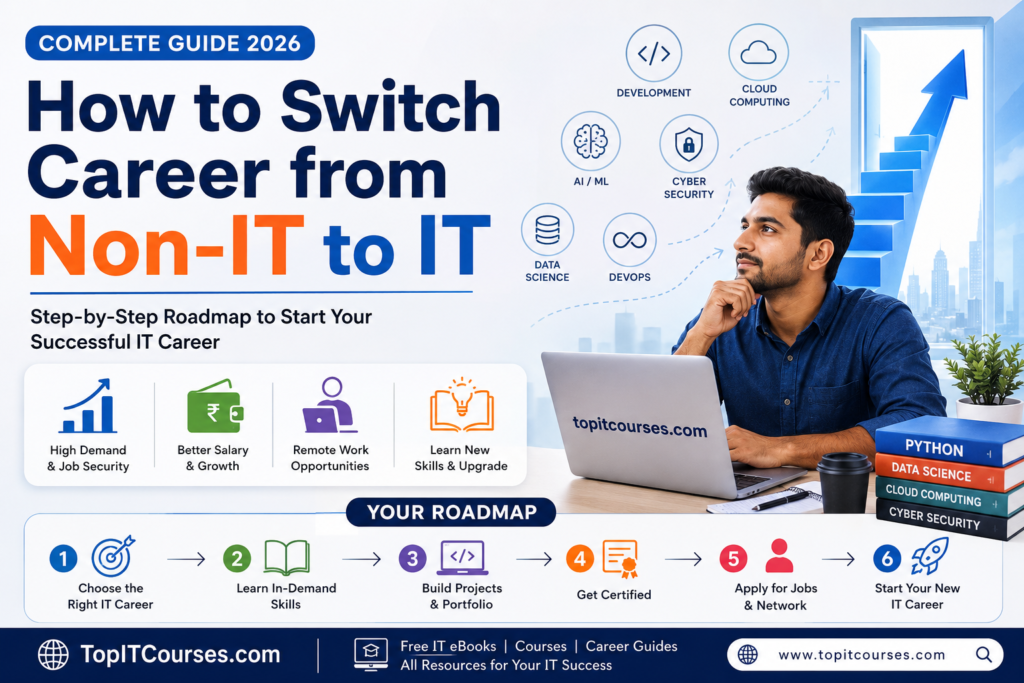
Changing your profession can feel overwhelming, especially if you have no technical background. The good news is that thousands of professionals successfully switch career from Non-IT to IT every year. Whether you are from Mechanical Engineering, Civil Engineering, Commerce, Arts, Banking, Sales, Healthcare, BPO, or any other field, the IT industry offers excellent opportunities for motivated learners.
If you are wondering how to switch career from Non-IT to IT, this guide explains everything you need to know. From choosing the right technology to learning essential skills, creating projects, preparing for interviews, and landing your first IT job, this article provides a step-by-step roadmap.
The demand for skilled IT professionals continues to grow across software development, cloud computing, cybersecurity, data analytics, artificial intelligence, and automation. Companies today are more interested in practical skills than traditional educational backgrounds, making it easier than ever to transition into the technology industry.
Is It Possible to Switch Career from Non-IT to IT?
Absolutely.
Many successful IT professionals originally came from backgrounds such as:
- Mechanical Engineering
- Civil Engineering
- Electrical Engineering
- B.Com
- BBA
- MBA
- Pharmacy
- Agriculture
- Arts
- Science
- Nursing
- Hospitality
- Banking
- Customer Support
- Sales
Your educational background is no longer the biggest deciding factor. Employers value practical skills, certifications, projects, and problem-solving abilities.
If you consistently learn and practice, you can successfully switch career from Non-IT to IT within a few months.
Why Switch Career from Non-IT to IT?
Many professionals choose to switch career from Non-IT to IT because the technology sector offers several advantages compared to traditional industries.
Some major benefits include:
- Higher salary packages
- Better career growth
- Global job opportunities
- Remote and hybrid work options
- Continuous learning
- High demand for skilled professionals
- Flexible career paths
- Better work-life balance in many organizations
Technology has become an essential part of every business, increasing the demand for software developers, cloud engineers, AI specialists, cybersecurity professionals, DevOps engineers, and data analysts.
Switch Career From Non-IT to IT – 9 Career Steps
Step 1: Choose the Right IT Career
The first step to switch career from Non-IT to IT is selecting a technology field that matches your interests.
Popular IT career options include:
Software Development
Perfect for people who enjoy coding.
Popular technologies include:
- Python
- Java
- JavaScript
- React JS
- Angular
- Spring Boot
- .NET
Data Science
Suitable for analytical thinkers.
Skills include:
- Python
- SQL
- Pandas
- NumPy
- Machine Learning
- Power BI
Artificial Intelligence
AI is among the fastest-growing careers.
Learn:
- Python
- Generative AI
- Prompt Engineering
- Machine Learning
- Deep Learning
- AI Tools
Cyber Security
Protect organizations from cyber threats.
Topics include:
- Network Security
- Ethical Hacking
- IAM
- Okta
- CyberArk
- SIEM
Cloud Computing
Popular cloud platforms include:
- AWS
- Microsoft Azure
- Google Cloud Platform
DevOps
Learn tools like:
- Docker
- Kubernetes
- Jenkins
- Git
- Terraform
- Ansible
Testing
Automation Testing includes:
- Selenium
- Java
- API Testing
- Playwright
Step 2: Learn Programming Basics
Programming is one of the most valuable skills when you switch career from Non-IT to IT.
Begin with beginner-friendly languages like:
- Python
- Java
- JavaScript
Focus on:
- Variables
- Loops
- Conditions
- Functions
- OOP Concepts
- Exception Handling
Don’t rush. Build a strong foundation.
Step 3: Learn SQL
Almost every IT role requires database knowledge.
Learn:
- SELECT
- INSERT
- UPDATE
- DELETE
- JOIN
- GROUP BY
- Aggregate Functions
SQL is essential for developers, testers, analysts, and data professionals.
Step 4: Build Practical Projects
Projects prove your practical knowledge.
Examples include:
- Student Management System
- Hospital Management System
- Employee Portal
- Weather Application
- Portfolio Website
- To-Do App
- Expense Tracker
Projects increase confidence and strengthen your resume.
Step 5: Learn Git and GitHub
Version control is a must-have skill.
Learn:
- Git Installation
- Git Commands
- Repository Management
- Branching
- Pull Requests
- GitHub Hosting
Recruiters often check GitHub profiles before interviews.
Step 6: Create an Impressive Resume
When you switch career from Non-IT to IT, your resume should emphasize skills instead of previous job titles.
Include:
- Technical Skills
- Certifications
- Projects
- GitHub Profile
- LinkedIn Profile
- Portfolio Website
- Internship Experience
Keep your resume concise and ATS-friendly.
Step 7: Earn Certifications
Certifications improve credibility.
Popular certifications include:
- AWS Cloud Practitioner
- Microsoft Azure Fundamentals
- Google Cloud Digital Leader
- Python Certification
- Java Certification
- Salesforce Administrator
- Okta Certified Professional
- CyberArk Certification
While certifications are valuable, combine them with hands-on practice for the best results.
Step 8: Prepare for Interviews
Interview preparation is crucial when you switch career from Non-IT to IT.
Prepare:
- Technical Questions
- Coding Problems
- HR Questions
- Mock Interviews
- Aptitude Tests
Common HR questions:
- Why do you want to switch career from Non-IT to IT?
- Tell me about yourself.
- Describe your projects.
- Why should we hire you?
Practice regularly to improve confidence.
Step 9: Apply for Jobs
Use trusted job portals such as:
- Naukri
- Indeed
- Foundit
- Company Career Pages
Apply consistently.
Customize your resume according to the job description.
Networking with professionals can also help you discover hidden opportunities. Steps
How Long Does It Take to Switch Career from Non-IT to IT?
One of the most common questions is how much time is required to switch career from Non-IT to IT. The answer depends on your dedication, learning schedule, and chosen specialization.
Here is a general roadmap:
| Learning Stage | Duration |
|---|---|
| Learn IT Fundamentals | 2–4 Weeks |
| Programming & SQL | 6–8 Weeks |
| Projects & Portfolio | 4–6 Weeks |
| Interview Preparation | 2–4 Weeks |
| Job Applications | Ongoing |
With consistent learning for 2–3 hours every day, many learners become job-ready within 4 to 8 months.
Why the IT Industry is the Best Career Choice in 2026
If you are planning to switch career from Non-IT to IT, there has never been a better time than 2026. Businesses across every industry are adopting digital technologies, cloud platforms, artificial intelligence, cybersecurity solutions, and automation. As a result, organizations are actively hiring skilled IT professionals regardless of their educational background.
Unlike many traditional careers, the IT industry focuses on practical skills and the ability to solve real-world problems. Whether you learn through online courses, instructor-led training, certifications, or self-study, employers are increasingly interested in what you can do rather than what degree you hold. This makes it easier for professionals from Non-IT backgrounds to enter the technology sector with the right preparation.
Common Challenges While Switching Careers
Most beginners face similar challenges:
Fear of Coding
Coding becomes easier with consistent practice.
Lack of Confidence
Everyone starts as a beginner. Focus on steady improvement.
Information Overload
Choose one learning path and avoid switching technologies frequently.
No Experience
Build projects, contribute to open-source initiatives, and complete internships to gain practical exposure.
Best Skills to Learn in 2026
If you want to switch career from Non-IT to IT, these skills are highly valuable:
- Python
- Java
- SQL
- Git
- GitHub
- HTML
- CSS
- JavaScript
- React JS
- Cloud Computing
- Artificial Intelligence
- Machine Learning
- DevOps
- Cyber Security
- Power BI
- Prompt Engineering
These technologies are in high demand across startups and multinational companies.
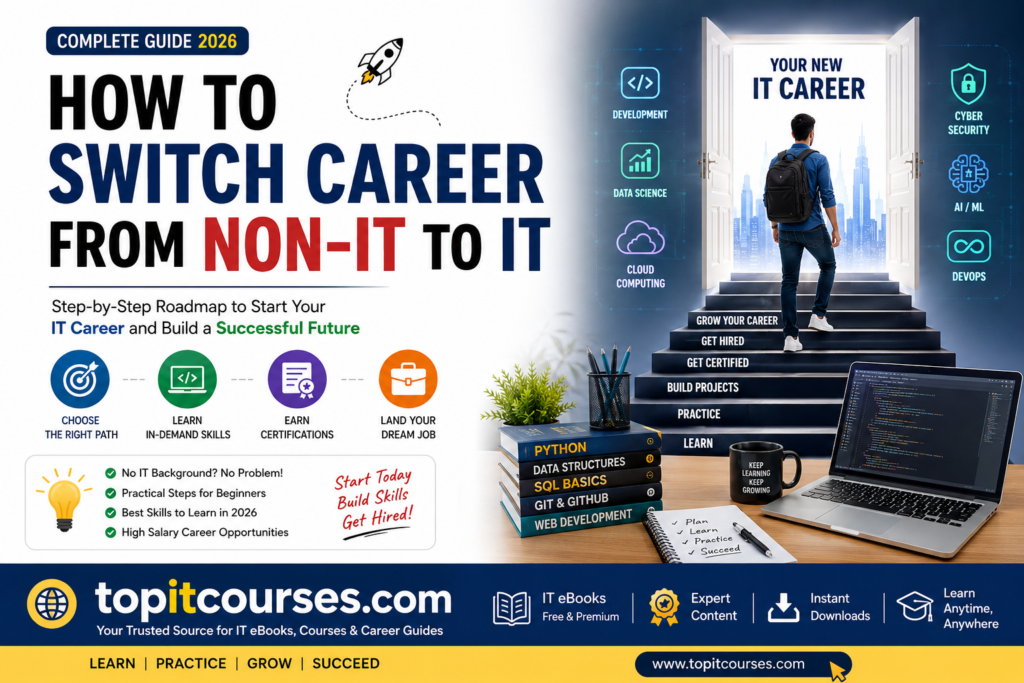
Career Opportunities After Switching to IT
After you successfully switch career from Non-IT to IT, you can apply for roles such as:
- Software Developer
- Python Developer
- Java Developer
- Full Stack Developer
- Frontend Developer
- Backend Developer
- Data Analyst
- Data Scientist
- AI Engineer
- Machine Learning Engineer
- DevOps Engineer
- Cloud Engineer
- Cyber Security Analyst
- IAM Engineer
- Automation Test Engineer
- Business Analyst
Each role offers strong career progression with opportunities to specialize further.
Salary Expectations
Entry-level salaries vary depending on skills, certifications, location, and company.
Approximate salary ranges in India:
| Experience | Salary |
|---|---|
| Fresher | ₹3 LPA – ₹6 LPA |
| 1–3 Years | ₹6 LPA – ₹10 LPA |
| 3–5 Years | ₹10 LPA – ₹18 LPA |
| 5+ Years | ₹18 LPA – ₹35 LPA+ |
Professionals with expertise in AI, cloud computing, DevOps, cybersecurity, and IAM often command higher salaries.
Essential Soft Skills for an IT Career
Technical knowledge alone is not enough. Companies also look for professionals with strong soft skills. As you switch career from Non-IT to IT, work on developing these abilities:
- Communication Skills
- Problem-Solving
- Analytical Thinking
- Team Collaboration
- Time Management
- Adaptability
- Presentation Skills
- Critical Thinking
- Continuous Learning Mindset
These skills will help you succeed in interviews and thrive in your new IT role.
Mistakes to Avoid While Switching Career from Non-IT to IT
Many beginners make avoidable mistakes that slow down their career transition. Avoid these common pitfalls:
Learning Too Many Technologies at Once
Focus on one career path instead of trying to learn everything simultaneously.
Ignoring Practical Projects
Recruiters value hands-on experience. Build real-world applications to showcase your skills.
Depending Only on Certificates
Certifications are valuable, but practical knowledge and project experience carry more weight during interviews.
Skipping Interview Preparation
Many candidates learn technical skills but fail to practice interview questions. Conduct mock interviews and improve your communication skills.
Not Updating LinkedIn
A professional LinkedIn profile can attract recruiters and increase your chances of receiving interview calls.
Tips for a Successful Career Transition
To successfully switch career from Non-IT to IT, follow these practical tips:
- Set clear learning goals.
- Dedicate time every day to study and practice.
- Complete real-world projects.
- Build a strong GitHub portfolio.
- Update your LinkedIn profile regularly.
- Join tech communities and attend webinars.
- Practice coding consistently.
- Keep learning new technologies.
- Stay patient and persistent during your job search.
Consistency is more important than speed.
Best Learning Resources for Beginners
If you’re planning to switch career from Non-IT to IT, make use of reliable learning resources:
- Online Instructor-Led Training
- Official Documentation
- YouTube Tutorials
- Coding Practice Platforms
- GitHub Repositories
- Technical Blogs
- Free IT eBooks
- Online Coding Challenges
- Community Forums
Learning from multiple trusted sources helps build a strong understanding of concepts
Why Build a Portfolio Before Applying for Jobs?
A portfolio demonstrates your practical skills and increases your chances of getting shortlisted. Include:
- Personal Portfolio Website
- GitHub Projects
- Case Studies
- Certificates
- Resume
- Technical Blogs
- Live Project Links
A strong portfolio often helps candidates stand out, especially when they are transitioning from a Non-IT background..
Future Scope After Switching Career from Non-IT to IT
The future of IT is promising, with technologies like Artificial Intelligence, Cloud Computing, Cybersecurity, Data Science, and Automation driving innovation. Professionals who continuously upgrade their skills can explore advanced roles such as:
- AI Engineer
- Cloud Solutions Architect
- DevOps Engineer
- Cybersecurity Consultant
- Data Engineer
- Machine Learning Engineer
- Solution Architect
- Technical Lead
- Engineering Manager
With experience, professionals can also transition into leadership positions, freelance consulting, or entrepreneurship.
Free IT Learning Resources at TopITCourses.com
If you are looking to switch career from Non-IT to IT, having access to quality study materials can make your learning journey easier. TopITCourses.com offers a growing collection of free and premium IT eBooks covering today’s most in-demand technologies.
You can find learning resources on:
- Python Programming
- Java Full Stack Development
- React JS
- Angular
- Spring Boot
- Data Science with AI
- Generative AI
- DevOps & Kubernetes
- Cyber Security
- Okta IAM
- Salesforce
- Power BI
- SQL
- Cloud Computing
These resources are designed to help beginners build strong technical foundations and prepare for certifications, projects, and job interviews.
Visit: https://topitcourses.com to explore the latest IT eBooks, career guides, and learning resources.
Frequently Asked Questions (FAQs)
Can I switch career from Non-IT to IT without coding experience?
Yes. Start with beginner-friendly programming languages like Python or Java and gradually build your coding skills through practice and projects.
How long does it take to switch career from Non-IT to IT?
With consistent learning and project work, many learners become job-ready within 4–8 months, depending on the career path they choose.
Which IT field is best for beginners?
Popular beginner-friendly options include Software Development, Data Analysis, Testing, Cloud Computing, and AI Fundamentals.
Do I need an engineering degree to enter IT?
No. Professionals from Commerce, Arts, Science, Management, Healthcare, and many other backgrounds have successfully transitioned into IT.
Are certifications enough to get a job?
Certifications help, but employers also expect practical skills, projects, problem-solving ability, and interview readiness.
Final Thoughts
If you are planning to switch career from Non-IT to IT, now is one of the best times to start. The IT industry values skills, practical knowledge, and continuous learning over traditional backgrounds. By selecting the right career path, mastering the fundamentals, building projects, earning relevant certifications, and preparing thoroughly for interviews, you can confidently make a successful transition.
Start by choosing a career path that matches your interests, learn the required skills, complete hands-on projects, earn relevant certifications, and prepare thoroughly for interviews. Remember that every successful IT professional started as a beginner. With the right mindset and structured learning, you can confidently transition into a rewarding IT career.
If you’re ready to begin your journey, explore free learning materials and IT eBooks at TopITCourses.com and take your first step toward a successful future in technology.
Remember that every expert was once a beginner. Stay focused, practice consistently, and keep improving your skills. With dedication and the right roadmap, your journey from a Non-IT background to a rewarding IT career can become a reality.
Ready to Start Your IT Career Journey?
Enroll for IT Career Courses Coding & Non-coding & Internship Program Today
→ https://sadiqtechsolutions.com/
For IT Career Courses Coding & Non-coding & e-Books this is the best site
→ https://topitcourses.com/
If you need IT Resume Templates for Free then Download Free Resumes here
→ https://topitcourses.com/free-resumes-download/
Read More Related Posts
How to Become a Generative AI Expert and Get a Job in 2026
→ https://sadiqtechsolutions.com/how-to-become-generative-ai-expert/
Edge AI vs Cloud AI: Which Should Your Business Use in 2026?
→ https://topitcourses.com/edge-ai-vs-cloud-ai-2026/
AI Impact on IT Jobs
→https://sadiqtechsolutions.com/ai-impact-on-it-jobs/
AI Automation Engineer Skills Required & Roadmap
→ https://sadiqtechsolutions.com/ai-automation-engineer-skills/
What is a Sailpoint Developer?
→https://topitcourses.com/what-is-sailpoint-developer-complete-guide/
Java Full Stack Developer Career Guide 2026
→ https://sadiqtechsolutions.com/java-full-stack-developer-career-guide-2026-salary-skills/
How to become a Prompt Engineer in 2026
→ https://sadiqtechsolutions.com/prompt-engineering-in-2026-skills-career-guide/
How to Get Your First IT Job With No Experience: A Practical Guide
→ https://sadiqtechsolutions.com/first-it-job-with-no-experience/
Data Analyst vs Data Scientist: Key Differences Explained
→ https://topitcourses.com/data-analyst-vs-data-scientist-key-differences/
Thankyou