Top 10 IT Learning Mistakes Every Student Should Avoid 2026 Guide
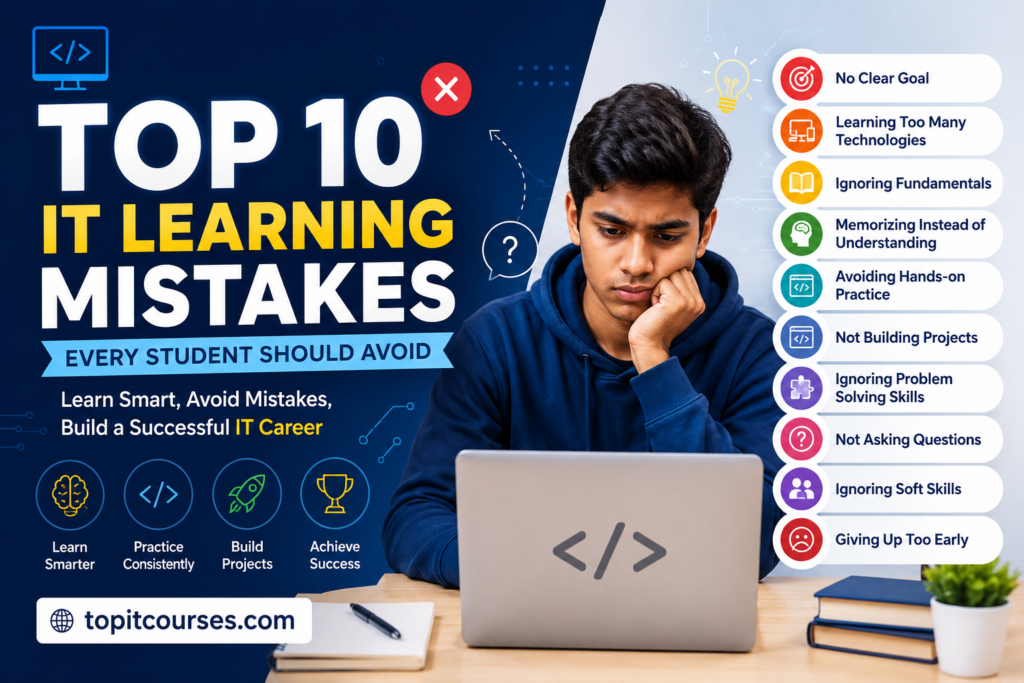
The Information Technology (IT) industry is one of the fastest-growing sectors in the world. Every year, thousands of students begin learning programming, networking, cloud computing, cybersecurity, data science, artificial intelligence, and software development with the dream of building a successful career.
However, many students struggle not because they lack intelligence, but because they make common IT Learning Mistakes during their learning journey. These mistakes slow down progress, reduce confidence, and sometimes even cause students to give up before reaching their goals.
The good news is that most of these problems are completely avoidable. By understanding the common IT Learning Mistakes, students can learn more efficiently, build stronger technical skills, and prepare themselves for successful careers in the IT industry.
In this guide, we will discuss the top 10 mistakes students make while learning IT and provide practical solutions to overcome them.
Why Avoiding IT Learning Mistakes Matters
Technology changes rapidly. Employers expect candidates to possess practical knowledge, problem-solving skills, communication abilities, and hands-on project experience.
Avoiding common IT Learning Mistakes helps students:
- Learn faster
- Build confidence
- Improve programming skills
- Perform better in interviews
- Complete projects successfully
- Stay motivated
- Increase job opportunities
- Build a strong technical portfolio
Let’s explore the most common mistakes.1. Learning Without a Clear Goal
One of the biggest IT Learning Mistakes students make is starting without defining a clear objective.
Many students begin learning random technologies simply because they are trending on social media or recommended by friends.
For example, they may study Python today, cybersecurity next week, and cloud computing the following month without mastering any one area.
How to Avoid It
Before starting:
- Decide your career goal.
- Choose one specialization.
- Create a learning roadmap.
- Set monthly milestones.
- Track your progress.
Having a clear direction saves time and keeps you motivated.
2. Trying to Learn Too Many Technologies at Once
Another common IT Learning Mistakes pattern is attempting to master multiple technologies simultaneously.
Students often enroll in several courses, thinking they will become job-ready faster. Instead, they become overwhelmed and forget what they have learned.
Better Approach
Focus on one technology at a time.
For example:
- Learn programming fundamentals.
- Master one programming language.
- Build projects.
- Then move to advanced concepts.
Depth is more valuable than superficial knowledge of many tools.
3. Ignoring Programming Fundamentals
Many beginners jump directly into frameworks without understanding the basics.
Skipping programming fundamentals is among the most damaging IT Learning Mistakes because advanced technologies rely on core concepts.
Important fundamentals include:
- Variables
- Data types
- Loops
- Functions
- Arrays
- Object-oriented programming
- Algorithms
- Data structures
A strong foundation makes learning future technologies much easier.
4. Memorizing Code Instead of Understanding It
Many students memorize syntax before exams or interviews.
Unfortunately, memorization does not help when solving real-world problems.
Understanding how code works is far more important.
Improve Your Learning
Whenever you write code:
- Understand each line.
- Experiment with different inputs.
- Modify the logic.
- Debug errors.
- Rewrite programs independently.
This develops real programming skills.
5. Avoiding Hands-on Practice
Perhaps the most common IT Learning Mistakes involve spending too much time watching tutorials without writing code.
Watching videos creates the illusion of learning.
Real learning happens when you practice consistently.
Practice Daily
Spend at least one hour every day:
- Solve coding exercises.
- Build mini-projects.
- Debug programs.
- Improve previous projects.
- Participate in coding challenges.
Practical experience is essential for success.
6. Not Building Real Projects
Employers care more about what you can build than what certificates you possess.
Students who only complete tutorials often struggle during interviews.
Building projects demonstrates:
- Technical knowledge
- Creativity
- Problem-solving ability
- Practical experience
Project Ideas
Create projects such as:
- Student Management System
- Library Management System
- Weather Application
- Expense Tracker
- Portfolio Website
- Online Quiz System
- Hospital Management System
- E-commerce Website
Projects strengthen both confidence and resumes.
7. Ignoring Problem-Solving Skills
Many students focus solely on syntax instead of learning how to solve problems.
Strong developers analyze problems before writing code.
Improve your problem-solving ability by:
- Practicing algorithms
- Solving logical puzzles
- Participating in coding contests
- Using platforms like LeetCode or HackerRank
- Reviewing multiple solutions
This habit significantly improves interview performance.
8. Not Asking Questions
Fear of asking questions is another major contributor to IT Learning Mistakes.
Some students worry that asking questions will make them appear inexperienced.
In reality, asking questions accelerates learning.
Seek help from:
- Trainers
- Mentors
- Online communities
- Discussion forums
- Fellow students
Every experienced developer started as a beginner.
9. Ignoring Soft Skills
Technical skills alone are not enough.
Companies also evaluate:
- Communication
- Teamwork
- Time management
- Presentation skills
- Professionalism
- Adaptability
Developing soft skills improves workplace performance and career growth.
Practice by:
- Giving presentations
- Explaining projects
- Participating in group discussions
- Writing technical documentation
These abilities complement technical expertise.
10. Giving Up Too Early
Programming can sometimes feel difficult.
Errors, bugs, and failed projects are normal parts of learning.
One of the biggest IT Learning Mistakes is assuming that struggling means you are not suited for IT.
Every experienced software engineer has faced countless challenges.
Stay consistent by:
- Celebrating small achievements.
- Practicing regularly.
- Taking short breaks when needed.
- Reviewing previous concepts.
- Maintaining a positive learning mindset.
Persistence is often the difference between success and failure.
Bonus Tips to Avoid IT Learning Mistakes
To maximize your learning experience:
- Follow a structured learning roadmap.
- Practice coding every day.
- Read technical documentation.
- Learn version control using Git.
- Create a GitHub portfolio.
- Participate in internships.
- Join open-source projects.
- Learn from mistakes.
- Stay updated with technology trends.
- Build a strong professional network.
These habits will help you become a confident IT professional.
How to Create an Effective IT Learning Plan
An organized learning plan helps prevent common IT Learning Mistakes and keeps you focused on long-term success.
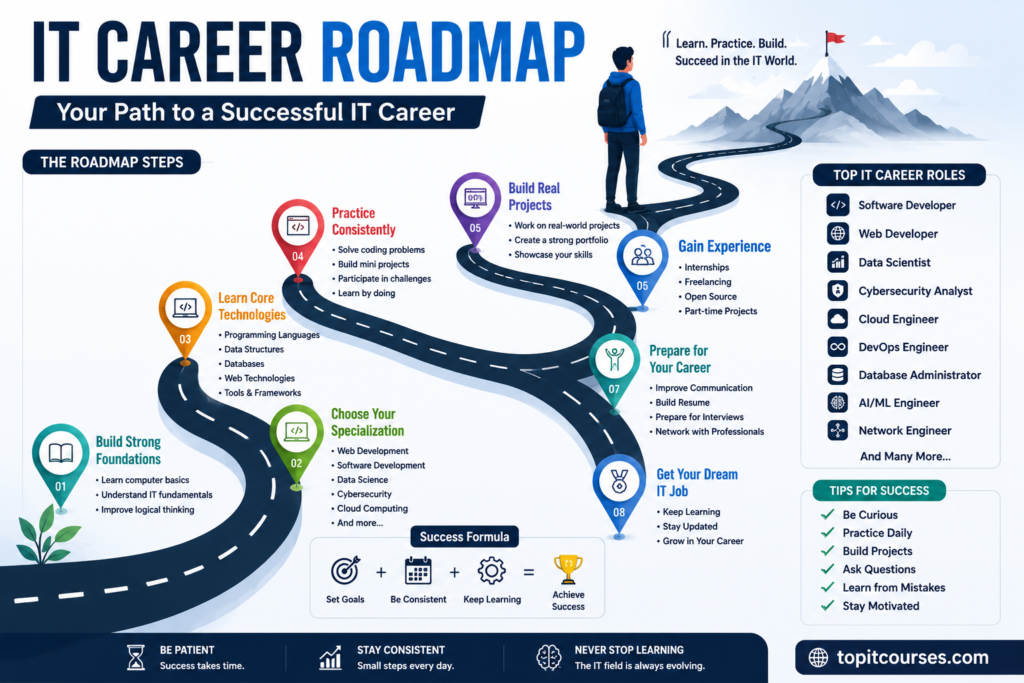
Step 1: Define Your Career Path
Choose a specialization based on your interests, such as:
- Software Development
- Web Development
- Mobile App Development
- Cloud Computing
- Cybersecurity
- Artificial Intelligence
- Data Science
- DevOps
- Networking
Step 2: Learn the Fundamentals
Before using advanced tools, understand the basics thoroughly.
Step 3: Practice Every Day
Consistency is more effective than occasional long study sessions.
Step 4: Build Real Projects
Apply your knowledge to practical applications.
Step 5: Prepare for Interviews
Practice coding questions, mock interviews, and communication skills.
Benefits of Avoiding IT Learning Mistakes
Students who avoid these mistakes enjoy several long-term benefits.
Better Technical Skills
A structured approach improves programming and analytical abilities.
Higher Confidence
Consistent practice reduces fear during coding and interviews.
Strong Portfolio
Projects demonstrate your practical expertise to employers.
Better Placement Opportunities
Companies prefer candidates with real-world experience and strong fundamentals.
Faster Career Growth
Good learning habits continue to benefit professionals throughout their careers.
Frequently Asked Questions (FAQs)
What are the most common IT Learning Mistakes?
The most common mistakes include learning without a goal, avoiding practical work, skipping programming fundamentals, not building projects, and giving up too early.
How can beginners avoid IT Learning Mistakes?
Beginners should create a structured roadmap, practice daily, build projects, ask questions, and focus on understanding concepts rather than memorizing code.
Are certifications enough to get an IT job?
No. Certifications help validate your knowledge, but employers also value practical skills, projects, internships, and problem-solving ability.
How many hours should students practice every day?
Practicing for one to three focused hours each day is generally more effective than studying for long hours occasionally.
Why are projects important?
Projects demonstrate your ability to apply concepts in real-world situations and make your resume more attractive to recruiters.
Final Thoughts
Every successful IT professional was once a beginner who faced challenges, made mistakes, and learned from experience. The key difference is persistence and a willingness to improve.
Understanding and avoiding common IT Learning Mistakes can save you months of frustration while helping you build stronger technical skills. Focus on learning the fundamentals, practice consistently, build meaningful projects, ask questions whenever you need help, and continue improving every day.
The IT industry rewards learners who stay curious, adapt to new technologies, and apply their knowledge through real-world experience. Whether your goal is to become a software developer, cloud engineer, cybersecurity specialist, data analyst, or AI engineer, avoiding these mistakes will put you on the path to long-term success.
Remember that progress is achieved through consistency rather than perfection. Every program you write, every project you complete, and every challenge you overcome brings you one step closer to a rewarding IT career.
Start learning with a clear plan, avoid these IT Learning Mistakes, and invest in continuous improvement. The skills you develop today can open doors to exciting opportunities and a successful future in the technology industry.
Ready to Start Your IT Career Journey?
Enroll for IT Career Courses Coding & Non-coding & Internship Program Today
→ https://sadiqtechsolutions.com/
For IT Career Courses Coding & Non-coding & e-Books this is the best site
→ https://topitcourses.com/
If you need IT Resume Templates for Free then Download Free Resumes here
→ https://topitcourses.com/free-resumes-download/
Read More Related Posts
How to Become a Generative AI Expert and Get a Job in 2026
→ https://sadiqtechsolutions.com/how-to-become-generative-ai-expert/
Edge AI vs Cloud AI: Which Should Your Business Use in 2026?
→ https://topitcourses.com/edge-ai-vs-cloud-ai-2026/
AI Impact on IT Jobs
→https://sadiqtechsolutions.com/ai-impact-on-it-jobs/
AI Automation Engineer Skills Required & Roadmap
→ https://sadiqtechsolutions.com/ai-automation-engineer-skills/
What is a Sailpoint Developer?
→https://topitcourses.com/what-is-sailpoint-developer-complete-guide/
Java Full Stack Developer Career Guide 2026
→ https://sadiqtechsolutions.com/java-full-stack-developer-career-guide-2026-salary-skills/
How to become a Prompt Engineer in 2026
→ https://sadiqtechsolutions.com/prompt-engineering-in-2026-skills-career-guide/
How to Get Your First IT Job With No Experience: A Practical Guide
→ https://sadiqtechsolutions.com/first-it-job-with-no-experience/
Data Analyst vs Data Scientist: Key Differences Explained
→ https://topitcourses.com/data-analyst-vs-data-scientist-key-differences/
Thankyou